
The Best Grottos, Fountains & Waterfalls for Your Backyard

February 26, 2025

Ever wanted to turn your backyard into a peaceful retreat? A fountain adds soothing sounds, a grotto creates a private escape, and a waterfall brings movement and energy. The right water feature can make any outdoor space feel more inviting.

Adding a water feature not only enhances the look of your yard but also creates a relaxing atmosphere. Grottos offer shade and privacy, fountains bring elegance, and waterfalls add a natural flow. Some are perfect for small yards, while others need more space to stand out.


This guide covers the best options for any backyard.
Grottos: Natural Beauty & Privacy

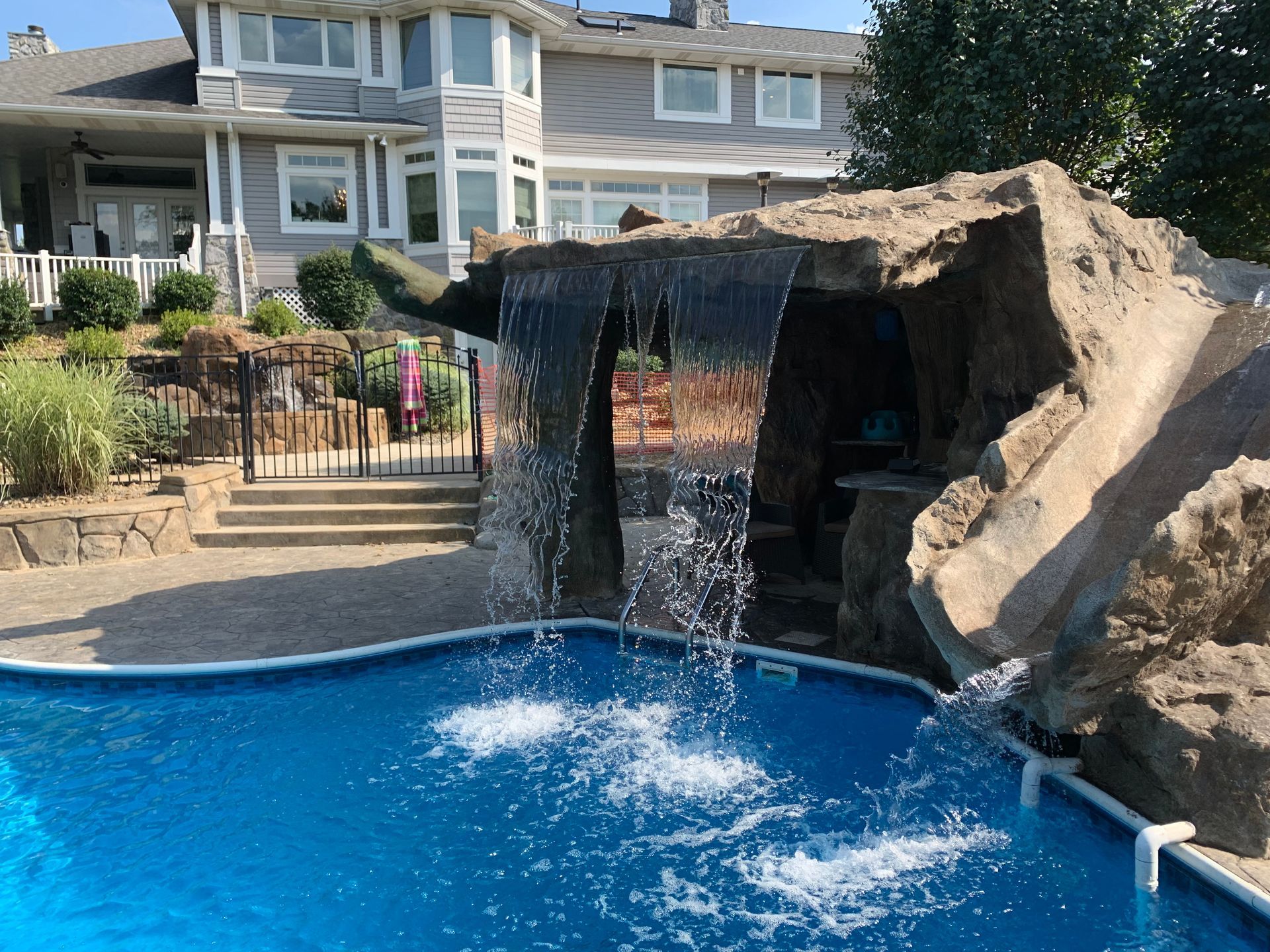
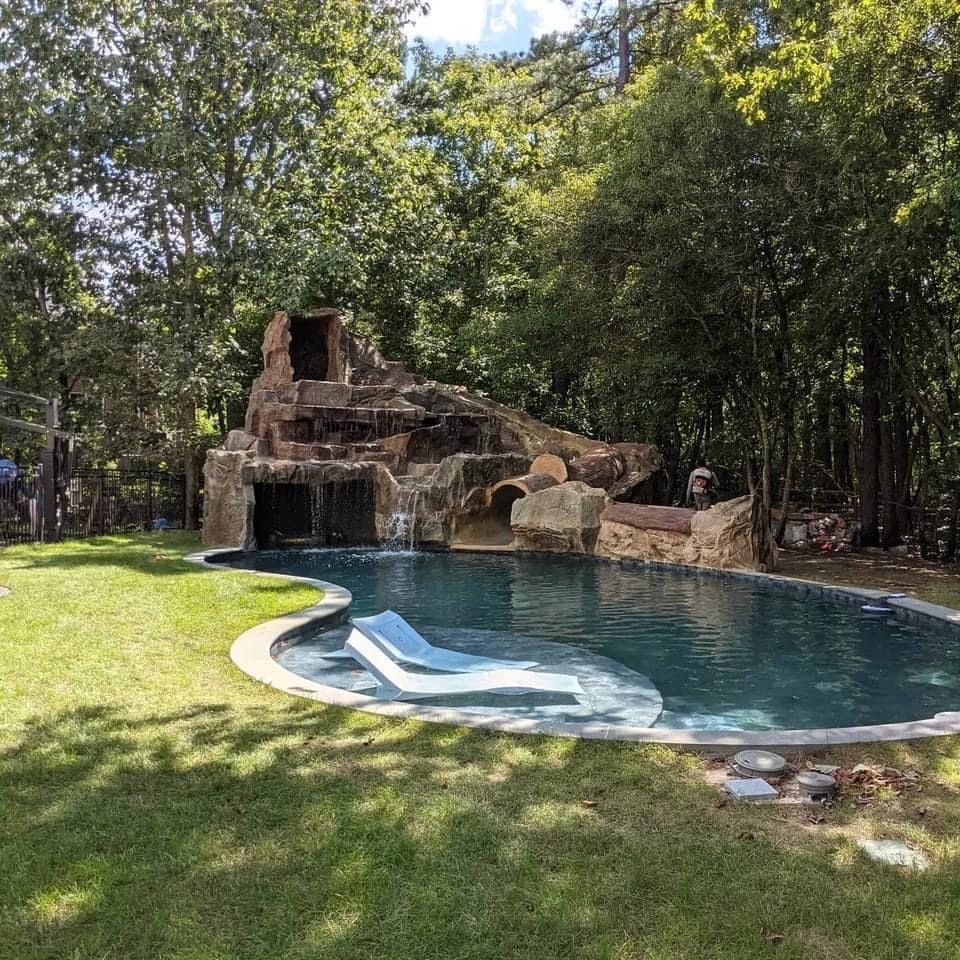
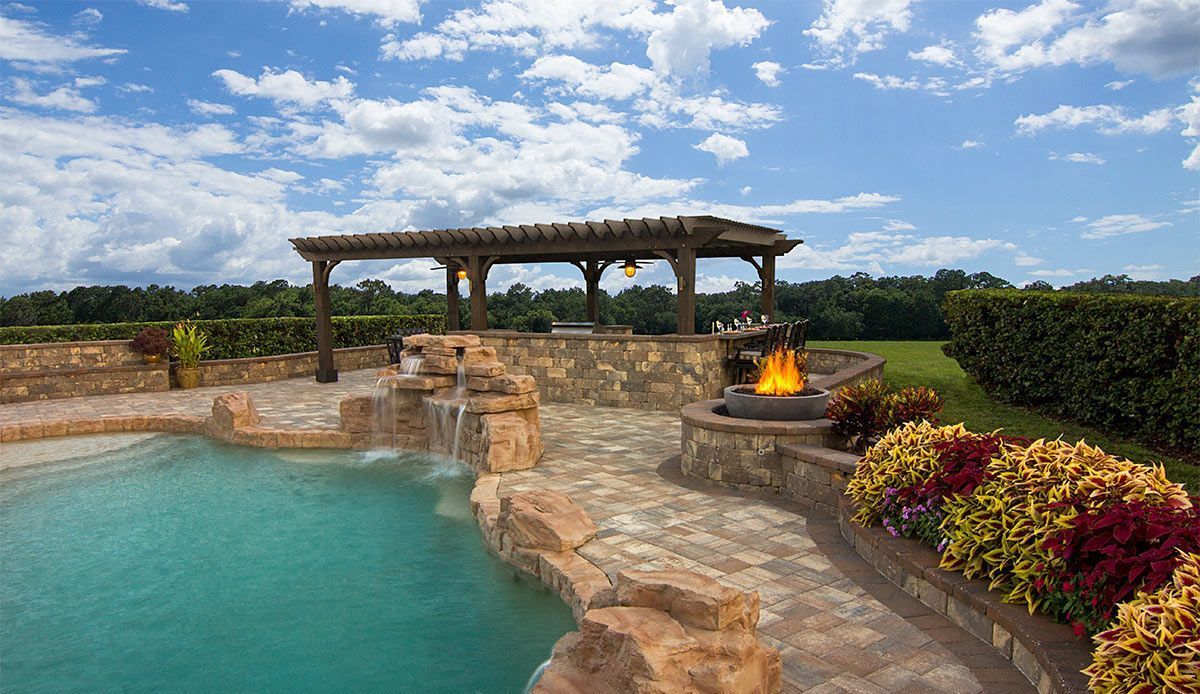
A grotto is a rock structure that creates a shaded, private spot in a backyard. Most grottos have a waterfall and are built into pools, but they can also stand alone. They provide shade, block out noise, and make an outdoor space feel more private.

What is a Grotto?

A grotto is a small cave-like structure, often made of rock, with water flowing over it. Some grottos are big enough to sit inside, while others are just for looks. They are common in pools, adding a waterfall feature that looks natural.

Best Grottos for Small Backyards

Smaller yards need grottos that don’t take up too much space but still add the calming effect of running water.


  • Mini Rock Grotto Waterfall – A small stack of rocks with a gentle waterfall, great for pools or garden corners.
  • Wall-Integrated Grotto – Built into a wall or fence to save space while adding privacy and relaxation.
  • Secluded Corner Grotto – A cozy, tucked-away spot with natural stones and plants for a quiet escape.
  • Spa Grotto – A rock-style cover over a hot tub or plunge pool for shade, privacy, and a resort vibe.
  • Freestanding Stone Grotto – A standalone grotto with seating and a small waterfall for a peaceful retreat.


If a grotto feels too big for your space, a fountain might be the perfect alternative.

Best Grottos for Large Backyards

Larger yards have more room for grottos that make a bigger impact.


  • Grand Rock Grotto Waterfall – A large, natural rock structure with cascading waterfalls, perfect for pools or garden ponds.
  • Hidden Cave Grotto – A spacious cave-like grotto with seating inside, offering a cool, shaded escape.
  • Lagoon-Style Grotto – A tropical-inspired grotto with waterfalls flowing into a lagoon or pool, creating a resort feel.
  • Multi-Tiered Grotto – A layered grotto with multiple waterfalls and rock formations for a dramatic, natural look.
  • Fire & Water Grotto – A unique grotto featuring waterfalls alongside a built-in fire pit or torches for a striking contrast.


A grotto can make any backyard feel more private and peaceful. However, keep in mind that grottos require occasional rock scrubbing and pump maintenance to keep water clear.

Fountains: A Classic and Versatile Choice

A fountain is one of the easiest ways to bring water into a backyard. Unlike grottos and waterfalls, it doesn’t need a pool or major construction. Just set it up, turn it on, and enjoy the sound of flowing water. Big or small, any yard can have a fountain that fits. 

Why Choose a Fountain?

Fountains are easy to install and maintain. Most just need a power source, and some don’t even need that if they’re solar-powered. The steady sound of running water creates a calming atmosphere and helps block out unwanted noise

Best Fountains for Small Backyards

A compact fountain can add movement and a relaxing touch without taking up much space.


  • Wall-Mounted Fountain – Attaches to a wall or fence, saving ground space while adding elegance and soothing water sounds.
  • Tiered Pedestal Fountain – A vertical design with cascading water that creates a peaceful ambiance without taking up much room.
  • Container or Bowl Fountain – A compact, modern option that can sit on a patio or garden corner for a subtle water feature.
  • Japanese Bamboo Fountain (Shishi Odoshi) – A minimalist, rhythmic water feature that enhances relaxation and blends naturally with greenery.
  • Disappearing (Pondless) Fountain – A space-saving fountain with a hidden underground reservoir, offering the beauty of running water without a visible basin.

Best Fountains for Large Backyards

More space allows for a fountain that makes a statement.


  • Grand tiered fountain- Adds a classic, elegant touch with water flowing down multiple levels.
  • Pond with a waterfall fountain - This creates a natural, relaxing vibe with the soothing sound of running water.
  • A floating fountain for ponds- Sprays water into the air, adding movement and a dramatic effect.
  • Wall fountain with a spillway - Has a sleek, modern look with a smooth flow of water, perfect for patios.
  • Sculptural or statue fountain- Doubles as art, adding personality and style to your outdoor space.

Waterfalls: Natural Elegance & Tranquility

A backyard waterfall isn’t just for looks—it makes the space more peaceful and helps keep water fresh. The sound of flowing water creates a calm and relaxing atmosphere, while the movement keeps ponds and pools from getting stagnant. Big or small, adding a waterfall is an easy way to bring nature into your yard.


Unlike fountains, waterfalls require occasional cleaning to prevent algae buildup and keep the water flowing properly.

Best Waterfalls for Small Backyards

Fountains are easy to install and maintain. Most just need a power source, and some don’t even need that if they’re solar-powered. The steady sound of running water creates a calming atmosphere and helps block out unwanted noise

Best Fountains for Small Backyards

Even with limited space, a waterfall can fit into a backyard. Here are some good options:


  • Pondless Waterfall – A natural-looking waterfall that recirculates water into a hidden underground basin, requiring less space and maintenance.
  • Wall-Mounted Waterfall – A sleek, space-saving option that allows water to cascade down a vertical surface, perfect for modern or compact outdoor areas.
  • Rock Cascade Waterfall – Uses stacked stones to create a natural, tiered waterfall effect, blending beautifully with plants and small ponds.
  • Urn or Bowl Waterfall – A stylish, self-contained feature where water flows over an urn or decorative bowl, ideal for patios or garden corners.
  • Japanese Bamboo Water Feature – A simple, Zen-inspired water feature that creates a calming trickling sound, perfect for a peaceful backyard retreat.

Best Waterfalls for Large Backyards

With more room, a waterfall can be a big focal point.


  • Multi-Tiered Rock Waterfall – A large, natural-style waterfall with multiple cascading levels, creating a bold, eye-catching feature. Ideal for expansive garden landscapes.
  • Pond and Waterfall Combo – A beautiful, traditional backyard feature where a waterfall feeds into a large pond. Great for koi fish, aquatic plants, and a natural ecosystem.
  • Sheer Descent Waterfall – A modern, sophisticated waterfall that produces a smooth, even sheet of water. Often incorporated into pools or retaining walls for a sleek look.
  • Grotto Waterfall – A massive, dramatic waterfall that creates a hidden cave or sitting area underneath. Frequently used in luxury pools for a resort-style experience.
  • Stream-Fed Waterfall – A long, winding waterfall that mimics a natural river, perfect for large yards. Water flows over rocks into a pond or disappears into a hidden basin for a continuous, peaceful effect.

Choosing the Right Water Feature for Your Space

The right water feature depends on space, budget, and maintenance. Small yards work best with wall fountains or compact waterfalls. Larger spaces can handle big fountains, ponds with waterfalls, or grottos. Fountains need the least upkeep, waterfalls require occasional cleaning, and grottos take more work and cost more.


No matter the size of your yard, adding a water feature can bring beauty and a calming atmosphere. The trick is to choose one that fits your lifestyle—something that looks great without becoming a hassle to maintain. 

Frequently Asked Questions

  • How Are Fountains and Waterfalls Different?

    Fountains spray water into the air with a pump, while waterfalls let water flow over an edge into a pond or stream.

  • What’s a Small Fountain Called?

    A bubbler fountain is a small water feature with a gentle flow, great for patios and gardens.

  • What Are the Types of Fountains?

    The main types are floor, tabletop, wall, pond, and birdbath fountains.

  • What’s Another Name for a Small Waterfall?

    A cascade—a small waterfall with gentle, flowing drops.

  • What Are Three Features of a Waterfall?

    Waterfalls come in different shapes. A block waterfall falls in a wide sheet, a classical waterfall is as tall as it is wide, and a curtain waterfall flows down in a smooth, tall stream.

  • Do Fountains Help Ponds?

    Yes! They keep water moving, add oxygen, and help prevent algae.

Bring Your Backyard to Life with Expert Craftsmanship

Your backyard should be a place where you can relax and enjoy the outdoors. Elite Outdoor Living Solutions builds outdoor spaces that are both beautiful and practical. From concrete patios to yard drainage and hardscaping, everything is designed to last.

Whether it’s a simple fountain or a full grotto, flowing water brings a calming touch. Get in touch today to create a backyard you’ll love spending time in!
October 7, 2026
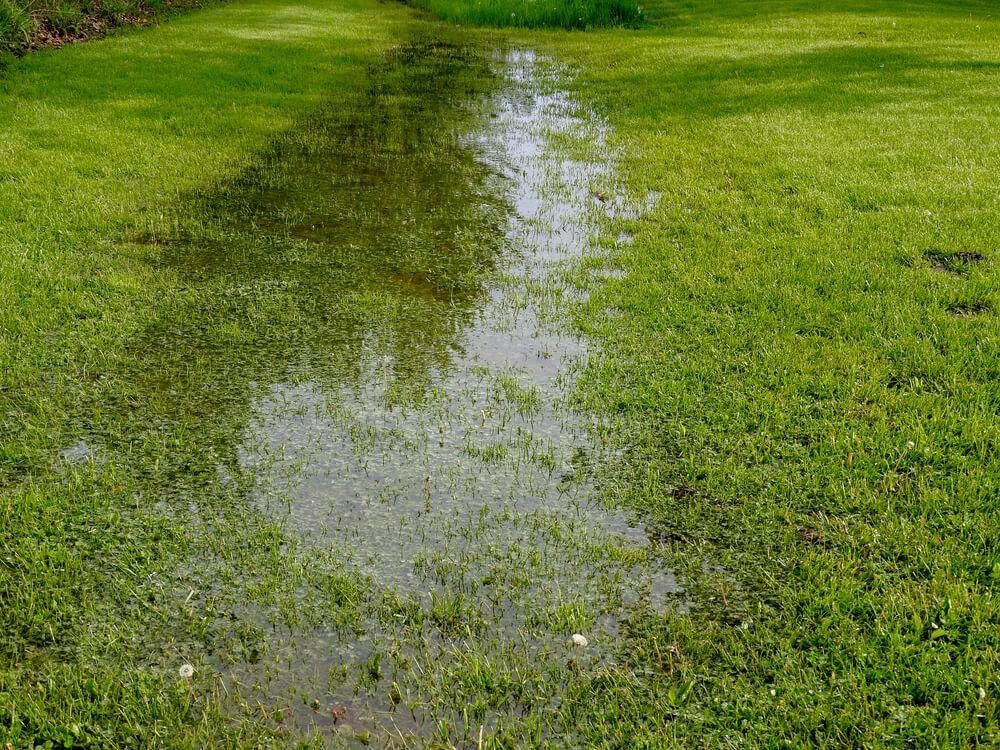
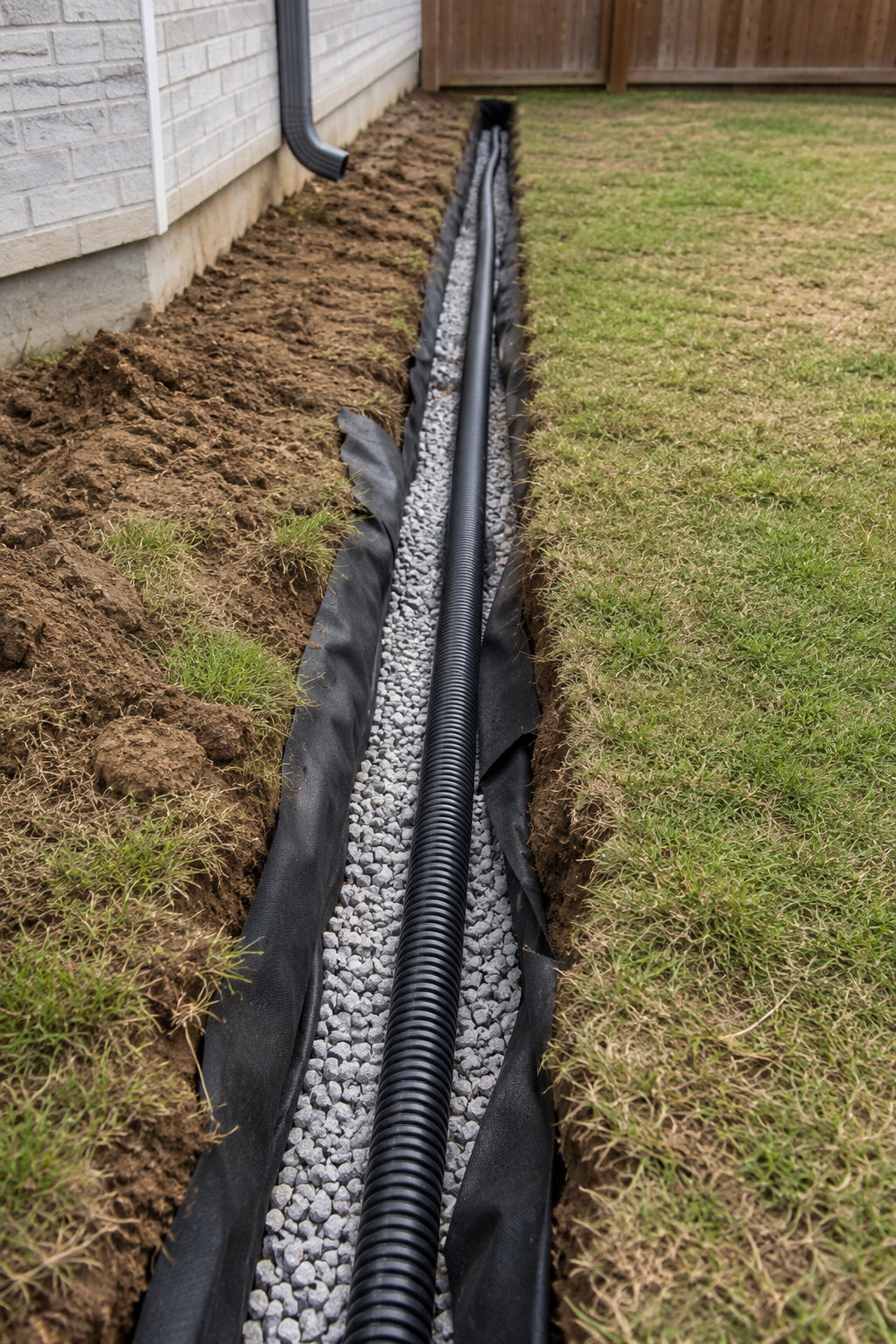
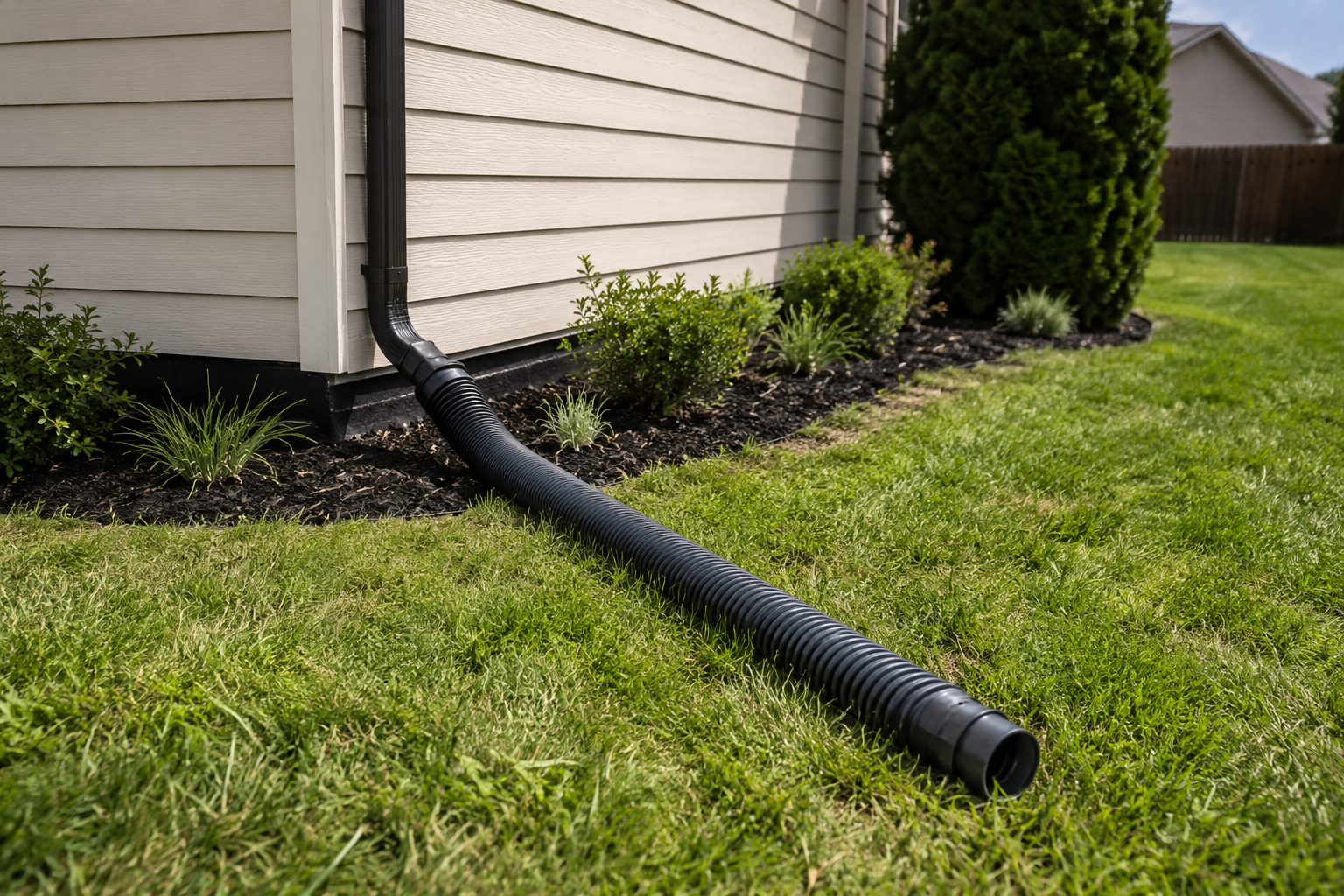
A simple plastic downspout extension is often the first thing homeowners try when they notice water pooling near the house — and sometimes it's genuinely enough. Other times, it's a band-aid on a problem that needs a real drainage system underneath it. Here's how to tell which situation you're in. What a Downspout Extension Actually Solves A downspout extension simply moves the point where roof runoff hits the ground further away from your foundation. If the only issue is that your gutters dump water directly against the house and it pools right at the foundation line, extending that discharge point ten or fifteen feet away can meaningfully reduce the problem — often for very little cost.  Where Extensions Fall Short An extension doesn't change how well your yard drains once the water reaches the ground — it just relocates where the water lands. If your yard already has poor drainage, slow-percolating clay soil, or a low spot that collects water regardless of where it enters, moving the discharge point a few feet doesn't solve the underlying problem. The water still ends up sitting somewhere on your property. When You Need a Real Drainage System If extending your downspouts hasn't meaningfully improved standing water, or if the water was never really about the downspout in the first place — it's happening across a wider area, or showing up as soggy ground days after rain — that's a sign you need an actual French drain or broader drainage system, not just a longer piece of plastic pipe. Why Combining Both Often Makes Sense Downspout extensions and French drains aren't competing solutions — they frequently work together. Extending downspouts reduces the volume of water hitting one concentrated spot, which makes it easier for a properly sized French drain or catch basin to handle the rest. On a lot of OKC properties, especially those with heavier clay soil, the most cost-effective plan uses simple extensions where they help and reserves the bigger drainage investment for where it's actually needed. Not Sure Which You Need? Elite Outdoor Living Solutions assesses yard drainage problems across Oklahoma City, Edmond, Norman, Moore, and Yukon and recommends the right combination of fixes for your property — not just the most expensive one. Call (405) 972-8338 or contact us for a free consultation.
September 30, 2026
If you've lived in the Oklahoma City metro for more than a season or two, you've probably noticed your yard seems to hold water longer than a friend's property just a few miles away. There's a real reason for that, and it comes down to what's actually underneath the grass: dense, compact clay soil that behaves very differently from the sandy or loamy soil drainage systems are often designed around. Why Clay Soil Drains So Poorly Clay particles are extremely fine and pack together tightly, leaving very little pore space for water to move through. Where sandy soil lets water percolate down and away within hours, clay-heavy soil can hold water at the surface or just below it for days. This is why so many OKC yards develop soggy patches, standing water, and slow-draining low spots even after a modest rain. The Foundation Risk Clay Soil Adds Clay soil doesn't just drain slowly — it also expands significantly when saturated and contracts when it dries out. This expansion and contraction cycle puts real pressure on foundations, driveways, and any hardscape sitting on top of it. A drainage problem on clay soil isn't just an inconvenience; over years, it becomes a structural risk to the property. Why Standard Drainage Advice Doesn't Always Apply A lot of generic drainage advice assumes soil that percolates reasonably well. On OKC clay, a French drain needs to be sized and sloped more aggressively to move water effectively, and grading work often needs steeper slopes than would be necessary on sandier soil, simply because clay won't absorb the volume a lighter soil type would handle on its own. What Actually Works on Clay Soil Systems designed specifically with clay's slow percolation rate in mind — properly sloped French drains with adequate gravel volume, catch basins positioned at real collection points rather than guessed locations, and grading that accounts for how much longer water sits before it moves — perform far better long-term than a generic drainage plan borrowed from a different soil type. This is also why a site assessment before installation matters more in OKC than it might in a region with lighter soil.  Get a Drainage Plan Built for OKC Soil Elite Outdoor Living Solutions designs yard drainage systems specifically accounting for Oklahoma's clay-heavy soil across Oklahoma City, Edmond, Norman, Moore, and Yukon. Call (405) 972-8338 or contact us for a free consultation.
September 23, 2026
A catch basin is one of the most misunderstood pieces of a yard drainage system. It's not a French drain and it's not a surface drain exactly — it's a collection point, and understanding what it actually does helps explain why some OKC yards need one even after a French drain is already installed. What a Catch Basin Does A catch basin is a below-grade box, usually with a grate on top, installed at a low point in the yard where water naturally collects. Water flows into the grate, settles in the basin, and is then piped away to a discharge point — a street, a dry well, or further into a French drain system. The basin itself also traps debris like leaves and silt before they can travel further into the pipe system and cause a clog downstream. Why a French Drain Alone Isn't Always Enough A French drain is excellent at intercepting water moving through soil, but it isn't designed to handle a large volume of water arriving quickly at a single low point — like the base of a downspout during a heavy Oklahoma storm, or a spot where multiple slopes in the yard converge. Trying to route that volume directly into a French drain's gravel bed can overwhelm it faster than it's designed to handle. A catch basin at that collection point takes the initial volume and controls how much enters the rest of the system. Common Places Catch Basins Get Installed The base of downspouts where roof runoff concentrates, low corners of a yard where multiple grade slopes meet, areas next to patios or driveways where hardscape sheds water into the yard, and spots prone to standing water that a French drain alone hasn't resolved are all typical catch basin locations. We often add a catch basin as part of a larger drainage plan rather than as a standalone fix, since it works best feeding into a larger system rather than as an isolated solution. Maintenance Matters Because catch basins are designed to trap debris, they need periodic cleaning — leaves, silt, and dirt that collect in the basin will eventually restrict flow if never cleared out. This is a simple maintenance task, but one that's easy to forget until the basin overflows during the next big storm.  Get a Full Drainage Plan for Your Property If your yard has a spot where water consistently overwhelms the current setup, Elite Outdoor Living Solutions designs complete yard drainage systems — including catch basins — for properties across Oklahoma City, Edmond, Norman, Moore, and Yukon. Call (405) 972-8338 or contact us for a free consultation.
September 16, 2026
A French drain isn't a set-it-and-forget-it system forever. Pipes clog, gravel beds compact and fill with silt, and systems installed without the right slope or outlet stop working long before most homeowners notice — usually right around the time a big storm reveals the problem. Standing Water Returns Where It Used to Drain The clearest sign is the most obvious one: an area that used to stay dry after rain is pooling again. This almost always means the pipe is clogged with silt or debris, the gravel bed has compacted and lost its ability to move water, or the outlet the drain empties into is blocked. Soggy Ground Directly Over the Drain Line If the ground along the drain's path stays wet or spongy longer than the surrounding yard, water is likely surfacing along the trench instead of moving through the pipe as intended. This can mean the pipe has collapsed, shifted, or was installed without enough slope to keep water moving toward the outlet. Water Near the Foundation Despite Having a Drain If a French drain was installed specifically to protect your foundation and you're still seeing moisture in the basement or along the foundation wall, the system either isn't intercepting water before it reaches that zone, or the original installation wasn't deep enough or positioned correctly relative to the foundation. What Repair Actually Involves Fixing a failed French drain starts with locating the failure point — usually by excavating a section to inspect the pipe and gravel condition, or using a camera scope for longer runs. Depending on what we find, repair can mean flushing and clearing debris, replacing a collapsed or damaged section of pipe, adding gravel back where it's compacted, or in some cases, re-routing the system entirely if the original slope or outlet was never correct to begin with. When It's Time to Replace Rather Than Repair A French drain installed without proper fabric wrapping around the gravel bed will silt up repeatedly no matter how many times it's cleared, since the root cause — soil migrating into the gravel — was never addressed. In these cases, a full reinstall with the correct materials is more cost-effective long-term than repeated cleanouts.  Get Your Drainage System Inspected If your French drain isn't performing the way it used to, Elite Outdoor Living Solutions inspects and repairs yard drainage systems across Oklahoma City, Edmond, Norman, Moore, and Yukon. Call (405) 972-8338 or contact us for a free assessment.
September 9, 2026
The body content of your post goes here. To edit this text, click on it and delete this default text and start typing your own or paste your own from a different source.
September 2, 2026
Ask the right questions before hiring a pool builder. Ensure a smooth project and avoid hidden costs. Contact us for expert guidance!
September 1, 2026
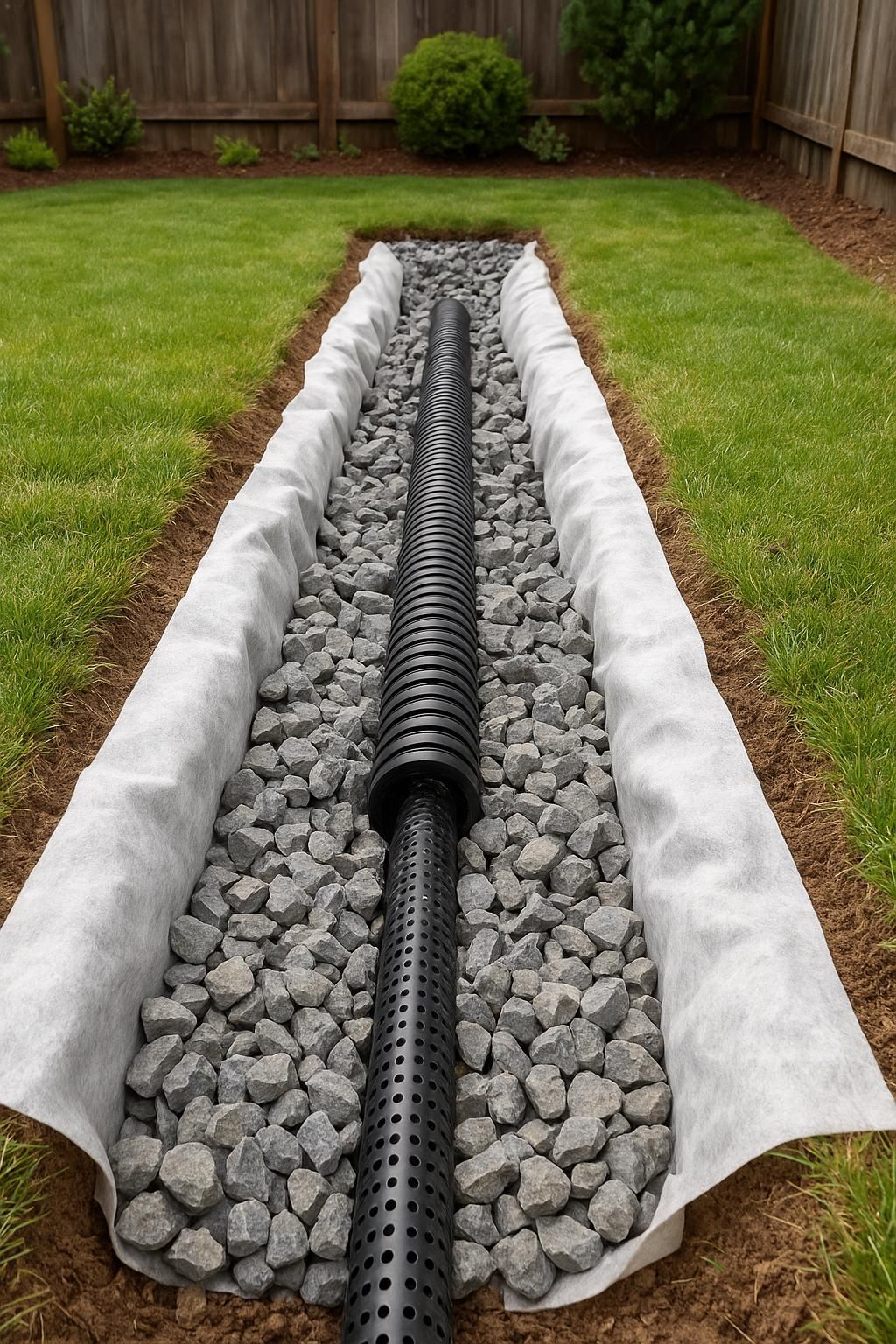
Once you know your yard needs a French drain, the next question is usually what the installation itself looks like — how long it takes, what gets dug up, and what your yard looks like when it's done. Here's what the process actually involves, step by step. 1. Site Assessment and Utility Marking Every installation starts with a walk of the property to confirm where water is collecting, trace where it's coming from, and map out the best path for the drain to carry it away. Before any digging happens, underground utilities on the property have to be located and marked — skipping this step risks hitting a gas, water, or electrical line during trenching. 2. Trenching Along the Planned Path With the path marked, the trench gets dug to the depth and slope needed to move water by gravity toward the discharge point. Getting the slope right matters more than the trench being deep — a French drain with the wrong grade won't drain properly no matter how well the rest of it is built. 3. Lining the Trench and Placing the Pipe The trench gets lined with landscape fabric, which keeps soil and sediment from working their way into the gravel and clogging the system over time. A perforated pipe goes in along the bottom of the trench, oriented so water can enter through the perforations and flow toward the discharge point. 4. Backfilling with Gravel Gravel gets backfilled around and over the pipe, filling the trench and giving water an easy path to travel through instead of sitting in the surrounding soil. The landscape fabric gets folded over the top of the gravel before the trench is closed, to keep the system from filling in with dirt over time. 5. Connecting to a Discharge Point The system has to end somewhere water can actually go — a street, a dry well, or a low point on the property away from the house. A French drain that isn't tied into a real discharge point just moves water a short distance instead of actually solving the problem, so this connection is one of the most important parts of getting it right. 6. Restoring the Yard Once the trench is filled and compacted, any sod or landscaping that was disturbed during digging gets restored as closely as possible to how it looked before. On most residential jobs, the trench line is the only visible trace once the yard is cleaned up and any disturbed grass has a chance to fill back in. How Long It Takes Most straightforward residential French drain installations wrap up within a day or two. Longer runs, systems that have to route around existing landscaping or hardscape, or yards where several problem areas are being tied into one system can take longer. The site assessment is usually where that timeline gets a clearer answer, since it depends on the specific yard. What to Do Before the Crew Arrives Clear the work area of furniture, planters, or anything else near the planned trench path. Point out any sprinkler lines, invisible fence wire, or landscape lighting that might not show up on a utility locate. Expect some disturbed grass or landscaping directly along the trench line — this is normal and typically fills back in or gets reseeded after installation. After Installation Once the trench is closed and the yard is cleaned up, the disturbed area along the trench line is usually the only visible sign work happened — everything else is below the surface. Grass along the trench typically needs a few weeks to fill back in. From that point, the system works continuously below ground any time it rains, without anything for the homeowner to maintain day to day.  Get a French Drain Installation Quote Elite Outdoor Living Solutions installs French drains and full yard drainage systems across Oklahoma City, Edmond, Bethany, Nichols Hills, Norman, Moore, Yukon, and Mustang. Every installation starts with an on-site assessment, so the scope and timeline reflect your actual yard rather than a general estimate. Call (405) 972-8338 or contact us to get started.
August 26, 2026
Learn how Vuba Stone lasts 10-15 years in Oklahoma's climate. Contact us for expert installation and durable outdoor solutions!
August 19, 2026
Compare French drains, channel drains, & catch basins for your yard. Choose the right solution today!
August 12, 2026
Plan your inground pool installation with our expert guide. Start early for a smooth build process and enjoy your summer oasis!